Texas HVAC maintenance is not just a once-a-year filter reminder. The system works hardest during long cooling seasons, dusty weather, spring pollen, high humidity, and sudden cold snaps. A useful maintenance calendar should match how the equipment is actually used.
This guide separates homeowner tasks from professional maintenance so you know what you can safely handle and what should be inspected by a technician.
The simple rule: prepare before the season, not during the breakdown
The best time to find a weak capacitor, clogged drain, dirty coil, worn contactor, or airflow restriction is before the first major heat wave. Once the system is running all day in July, small issues become uncomfortable fast.
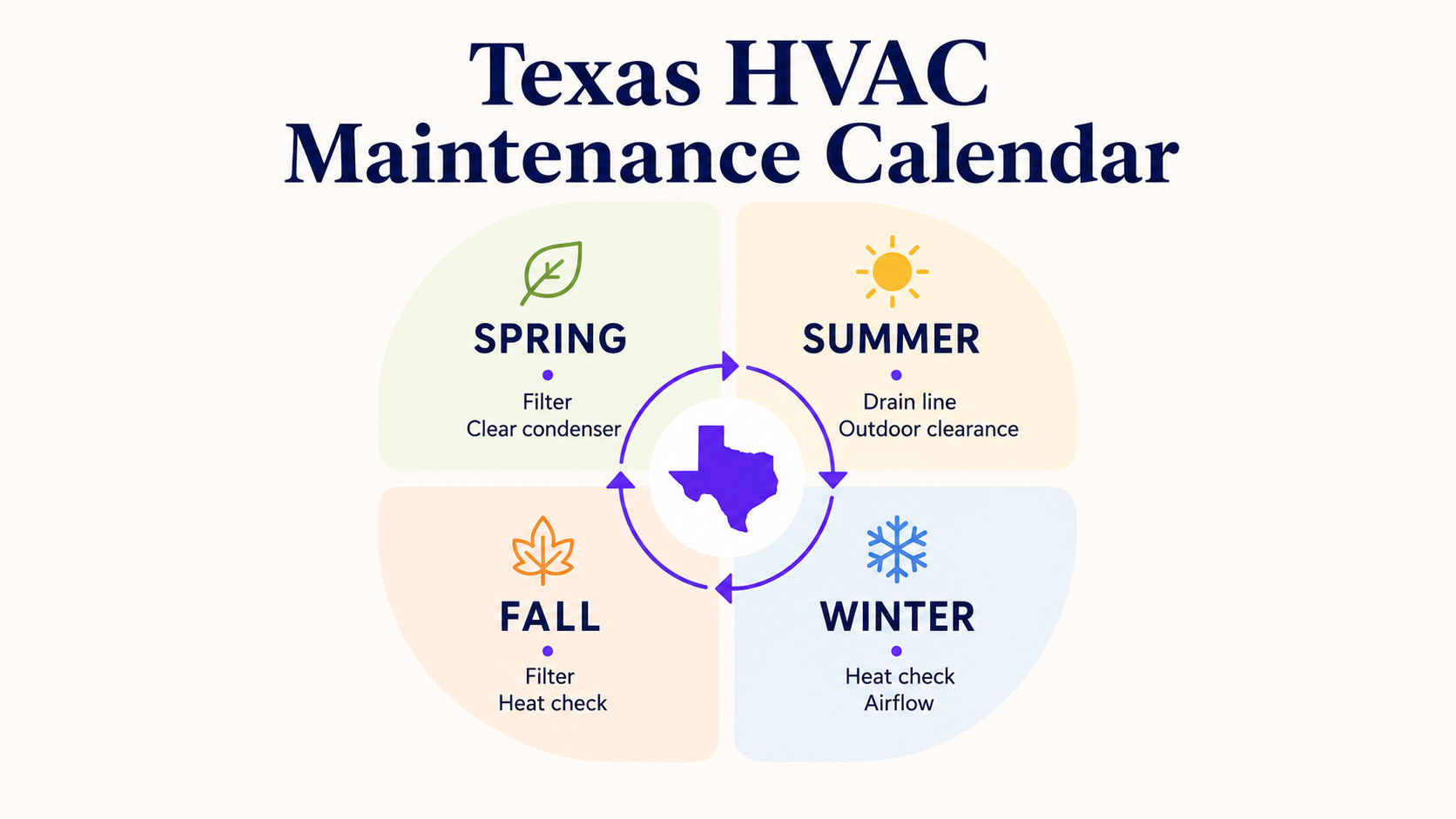
For Ferris-area homes, think in four maintenance windows:
- Spring: prepare for cooling season.
- Summer: protect airflow and drainage while the system runs hard.
- Fall: prepare for heating and catch cooling-season wear.
- Winter: watch heat pump/furnace operation and keep filters current.
Spring: get ready before the first serious heat
Spring is the most important maintenance season for air conditioning. The system may have been idle or lightly used, and the first hot week reveals problems.
Homeowner tasks
- Replace or inspect the air filter.
- Make sure return grilles are not blocked.
- Open supply vents and confirm air can move freely.
- Clear leaves, grass, and debris around the outdoor unit.
- Trim vegetation so the outdoor unit has breathing room.
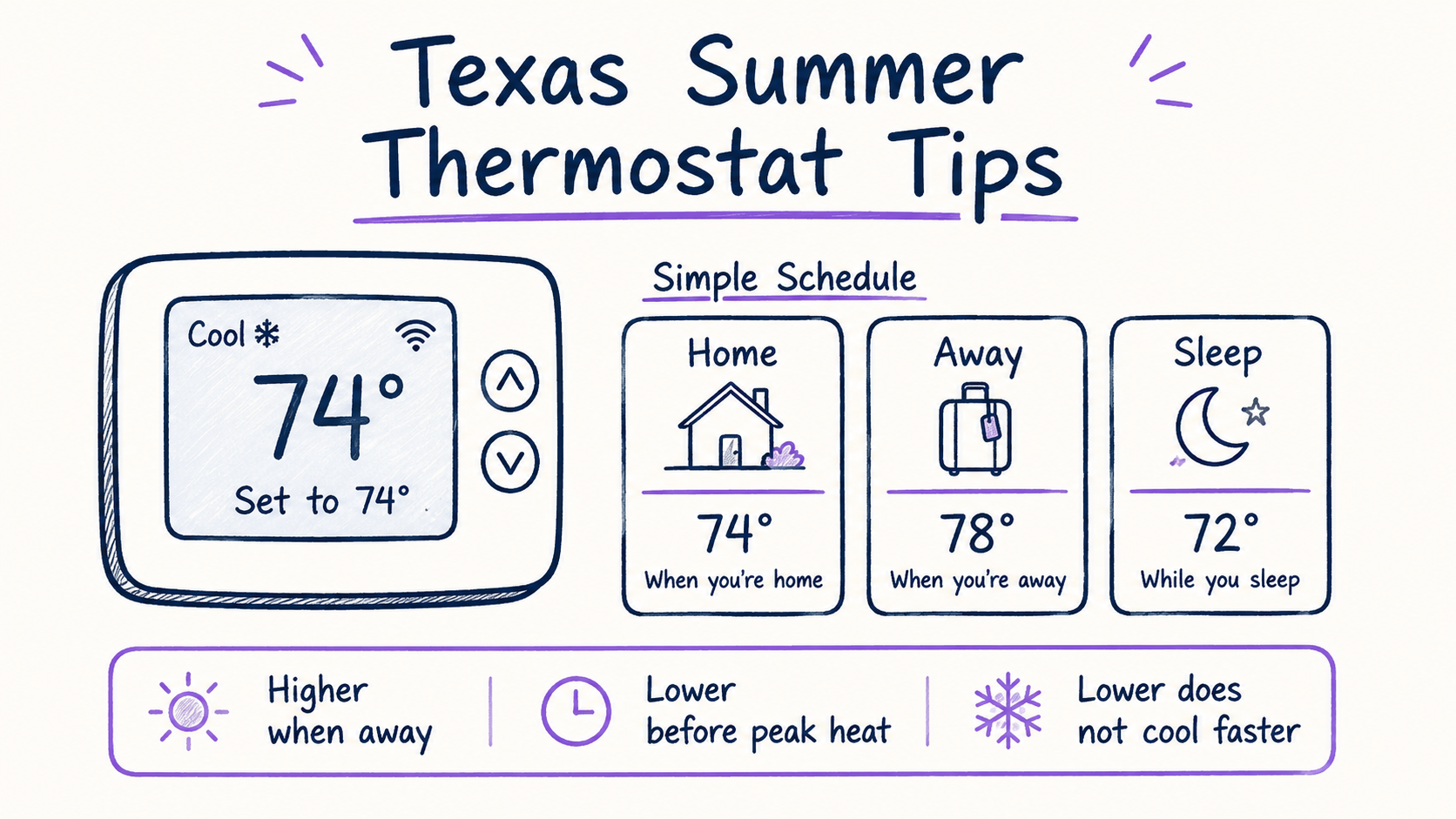
- Check the thermostat schedule before summer.
- Look for water stains around the indoor unit or ceiling below attic equipment.
- Make sure the condensate drain outlet is not buried or blocked if visible.
Do not remove outdoor-unit panels or spray electrical areas. Light rinsing of the coil from outside may be appropriate in some cases, but avoid bending fins or forcing water into electrical components.
Professional spring maintenance
A spring tune-up may include:
- Checking refrigerant performance
- Inspecting electrical components
- Testing capacitors and contactors
- Checking blower operation
- Inspecting evaporator and condenser coils
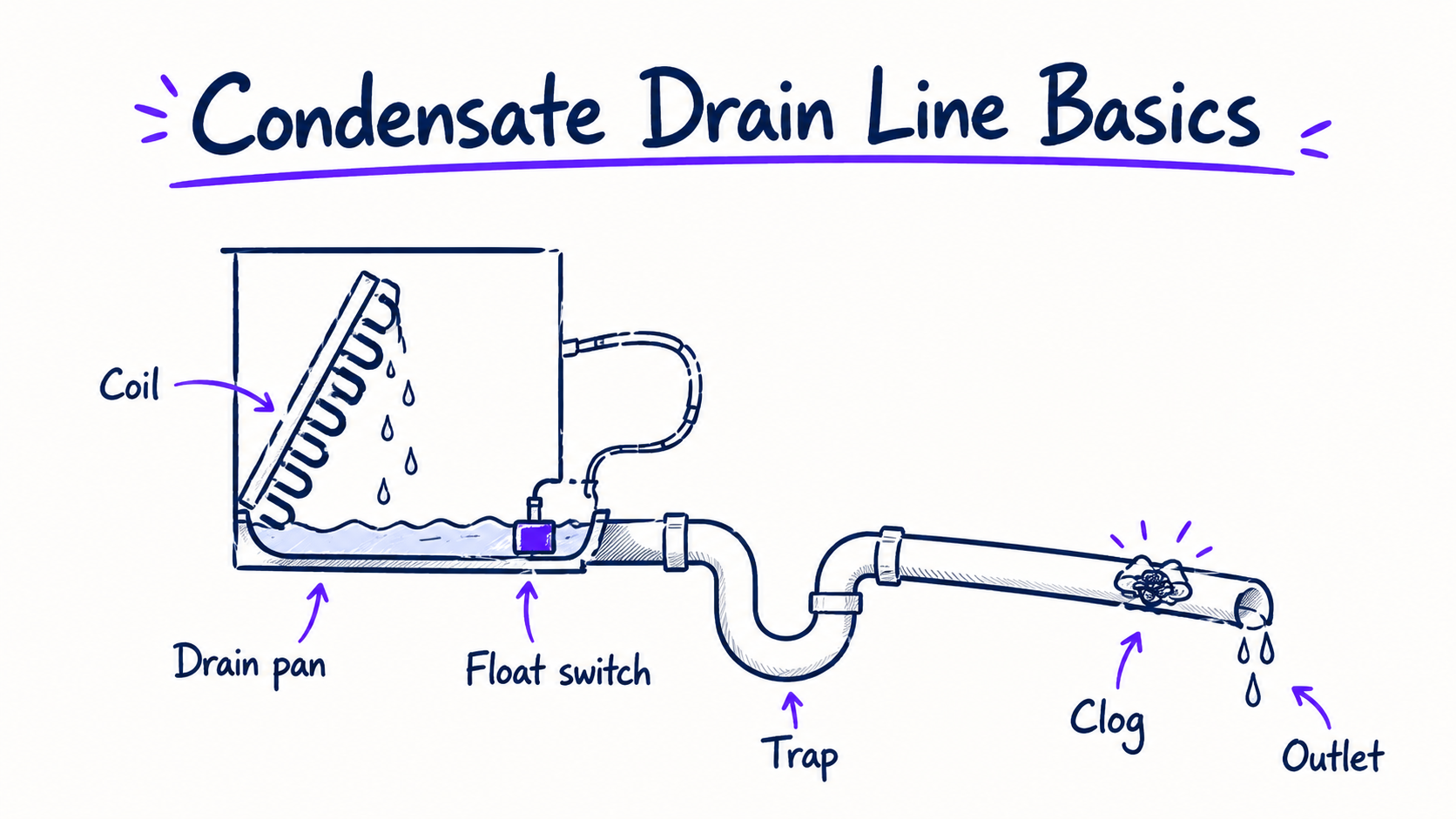
- Checking condensate drain and float switch operation
- Measuring temperature split and airflow indicators
- Inspecting duct condition where accessible
- Verifying thermostat operation
A good cooling check is not just “it turns on.” It should look at whether the system is likely to survive the season.
Summer: keep airflow and drainage under control
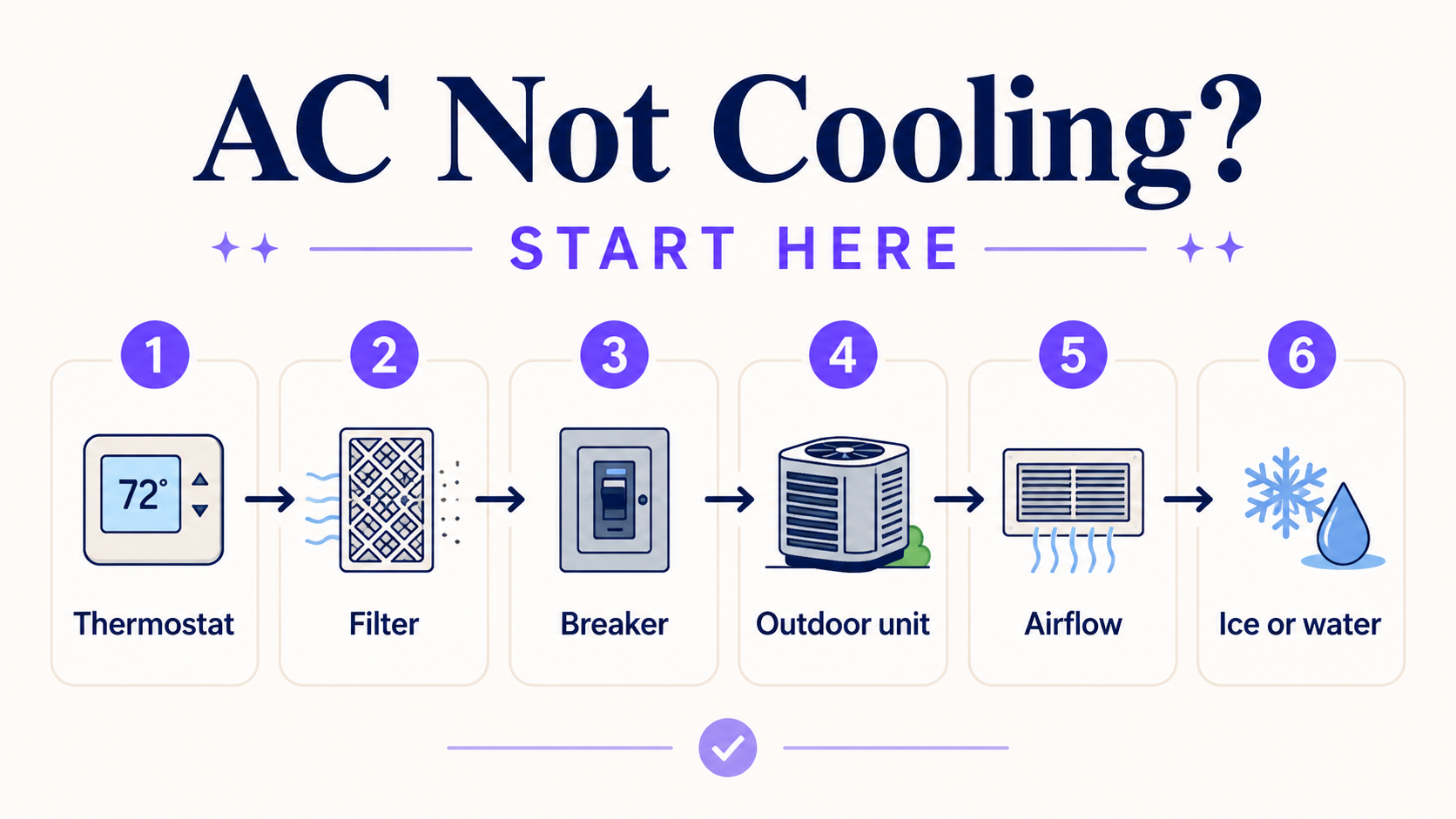
In summer, your main job is to avoid starving the system for air and to catch water problems early.
Homeowner tasks
- Check filters more often, especially with pets, dust, or heavy use.
- Keep return grilles clean.
- Do not block vents with furniture or rugs.
- Watch for weak airflow from vents.
- Look for ice on refrigerant lines or the indoor coil area.
- Look for water near the indoor unit.
- Keep grass clippings and weeds away from the outdoor unit.
- Avoid extreme thermostat setbacks during heat waves.
- Use ceiling fans for comfort, but turn them off in empty rooms.
If the system runs constantly and cannot reach the set temperature, do not assume the thermostat schedule is the whole problem. Summer performance complaints often involve airflow, refrigerant, dirty coils, attic ducts, insulation, or system sizing.
Summer warning signs
Request service if you notice:
- Breaker trips
- Burning smell
- Buzzing outdoor unit
- Ice on lines or coil
- Water in the emergency pan
- AC short cycling
- Outdoor unit not running
- Warm air from vents
- Weak airflow even with a clean filter
Summer is not the time to keep resetting a tripping breaker and hoping it holds.
Fall: switch from cooling to heating thoughtfully
Fall in Texas can be confusing because the system may cool in the afternoon and heat at night. This is a good time to clean up after cooling season and verify heating before the first cold front.
Homeowner tasks
- Replace or check the filter.
- Test heat before the first cold night.
- Confirm thermostat mode and schedule.
- Notice unusual smells when heat first runs.
- Check that supply vents are open.
- Make sure the area around indoor equipment is clear.
- If you have a heat pump, confirm Emergency Heat is not on by accident.
A slight dusty smell when heat first runs can happen if dust burns off. Persistent burning smells, smoke, electrical odor, or breaker trips are not normal.
Professional fall maintenance
Fall maintenance may include:
- Furnace burner and ignition checks where applicable
- Heat exchanger visual inspection where accessible
- Gas pressure and combustion-related checks by qualified personnel
- Heat pump operation checks
- Electric heat strip checks
- Safety control checks
- Blower and airflow checks
- Thermostat and sequence-of-operation checks
Heating safety matters. Do not treat furnace issues as DIY projects.
Winter: protect heat pumps and avoid backup heat surprises
Texas winters are shorter than cooling season, but cold snaps can expose heat pump, furnace, thermostat, and insulation issues.
Homeowner tasks
- Keep filters changed.
- Check that outdoor heat pump units are not blocked.
- Learn the difference between Heat and Emergency Heat.
- Watch for heavy ice that does not clear from a heat pump.
- Keep supply and return vents open.
- Listen for unusual startup noises.
- Do not store items against indoor equipment.
If you have a heat pump, remember that the outdoor unit may run in heating mode. Steam during defrost can be normal. A unit encased in ice is not.
Monthly filter routine
A simple filter schedule works better than guessing. Check the filter monthly until you know your home’s pattern. Some homes can go longer. Some need changes more often.
Filter life depends on:
- Pets
- Dust
- Occupancy
- Remodeling
- Filter type
- Runtime
- Return location
- Duct leakage
- Smoking, candles, or indoor particulate sources
Do not choose a filter only by the highest rating on the shelf. The system has to move air through it. If the filter whistles, bows inward, or causes weak airflow, ask whether the filter type is appropriate for the system.
Maintenance tasks homeowners should not do
Leave these to trained service:
- Refrigerant charging
- Electrical testing inside live equipment
- Capacitor replacement
- Contactor replacement
- Gas furnace adjustments
- Combustion testing
- Heat exchanger diagnosis
- Blower motor replacement
- Coil cleaning that requires cabinet access
- Bypassing safety switches
- Repeated breaker resets
The homeowner role is observation, basic cleaning, filter care, and early reporting. That is still valuable.
A practical annual calendar
| Season | Homeowner focus | Professional focus |
|---|---|---|
| Spring | Filter, thermostat, outdoor clearance, drain clues | Cooling tune-up, electrical, refrigerant performance, drain, airflow |
| Summer | Filters, airflow, water, ice, outdoor debris | Diagnose performance issues and breakdowns |
| Fall | Heating test, filter, thermostat mode | Heating safety, heat pump/furnace checks |
| Winter | Filter, heat pump ice, Emergency Heat awareness | Heating repair, airflow, safety controls |
FAQ
How often should HVAC maintenance be done in Texas?
Many homes benefit from professional maintenance twice a year: cooling checked before summer and heating checked before winter. Filters should be checked more often by the homeowner.
What is the most important AC maintenance task for homeowners?
Keeping the correct filter clean and maintaining good airflow are the biggest homeowner tasks. Also watch for water, ice, and unusual noises.
Should I service my AC before summer?
Yes. Spring maintenance can catch problems before the system is under heavy summer load.
Is fall HVAC maintenance necessary in Texas?
Yes, especially for heat pumps and gas furnaces. Heating may run less often, but safety and proper operation still matter.
Can maintenance prevent every breakdown?
No. Maintenance reduces risk and catches many issues early, but parts can still fail. The goal is fewer surprises and better information.
Related guides
- AC Not Blowing Cold Air? Start With These Safe Checks
- Condensate Drain Line Clogged? What the Symptoms Usually Mean
- Better Thermostat Settings for a Texas Summer
- Heat Pump Stuck Heating or Cooling? Start With the Basics
Sources worth reading
- ENERGY STAR HVAC maintenance checklist: https://www.energystar.gov/campaign/heating_cooling/maintenance_checklist
- U.S. Department of Energy air conditioner maintenance: https://www.energy.gov/energysaver/maintaining-your-air-conditioner
- U.S. Department of Energy heat pump systems: https://www.energy.gov/energysaver/heat-pump-systems
WHEN TO REQUEST SERVICE
Need help with this issue in Ferris or nearby Ellis County?
Submit a request and we will review it for local follow-up. Include what the system is doing, when it started, and anything you have already checked.