Air duct cleaning is one of the most oversold services in home comfort. Sometimes it is justified. Sometimes it is mostly a way to sell a homeowner something that will not solve the real problem.
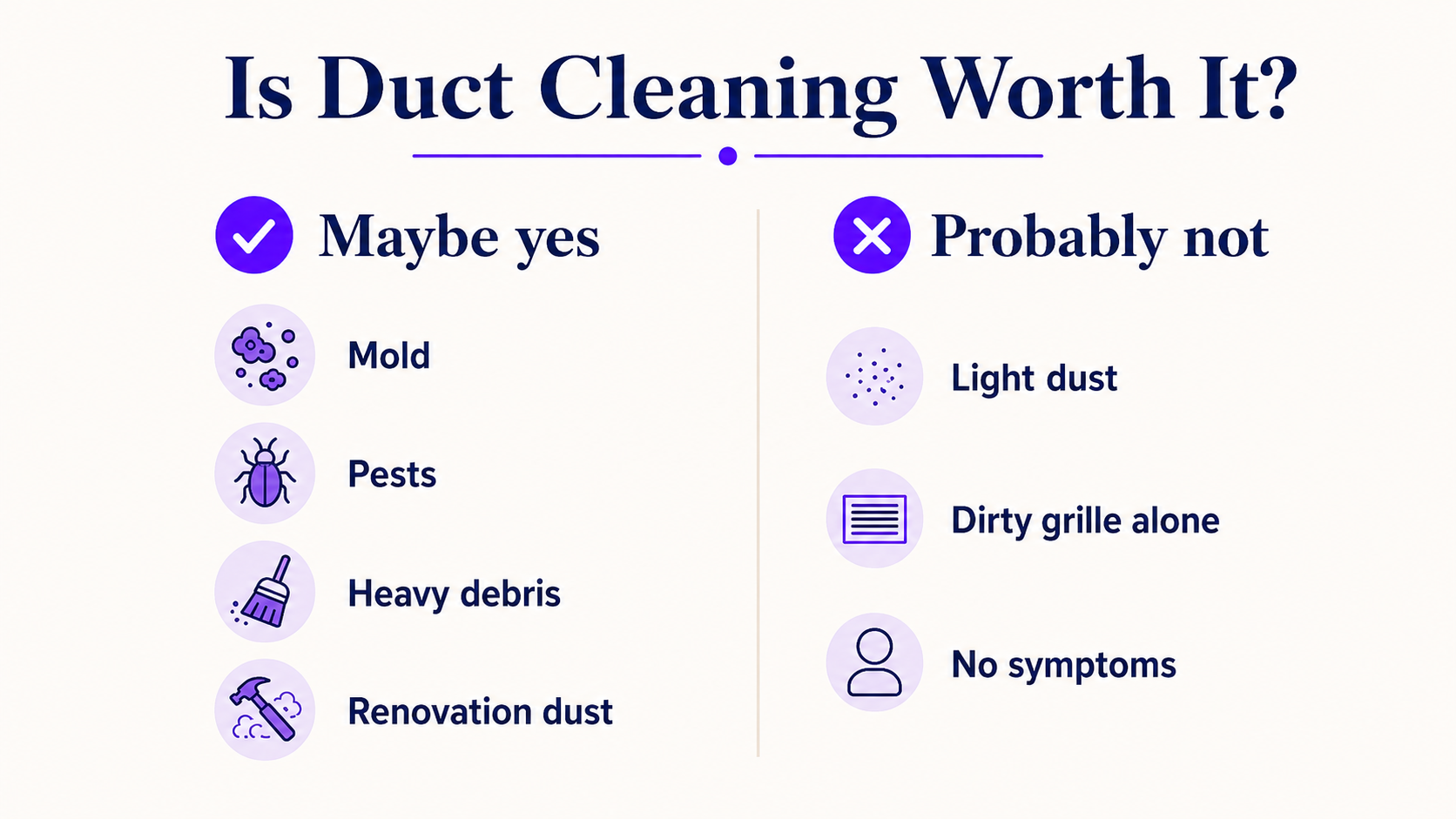
The straight answer: air duct cleaning may be worth it if there is visible contamination, pest activity, heavy debris, post-construction dust, water damage, or a specific odor/source problem tied to the ducts. It is usually not worth it as a routine cure-all for dust, allergies, high bills, or weak airflow unless the ducts are actually part of the problem.
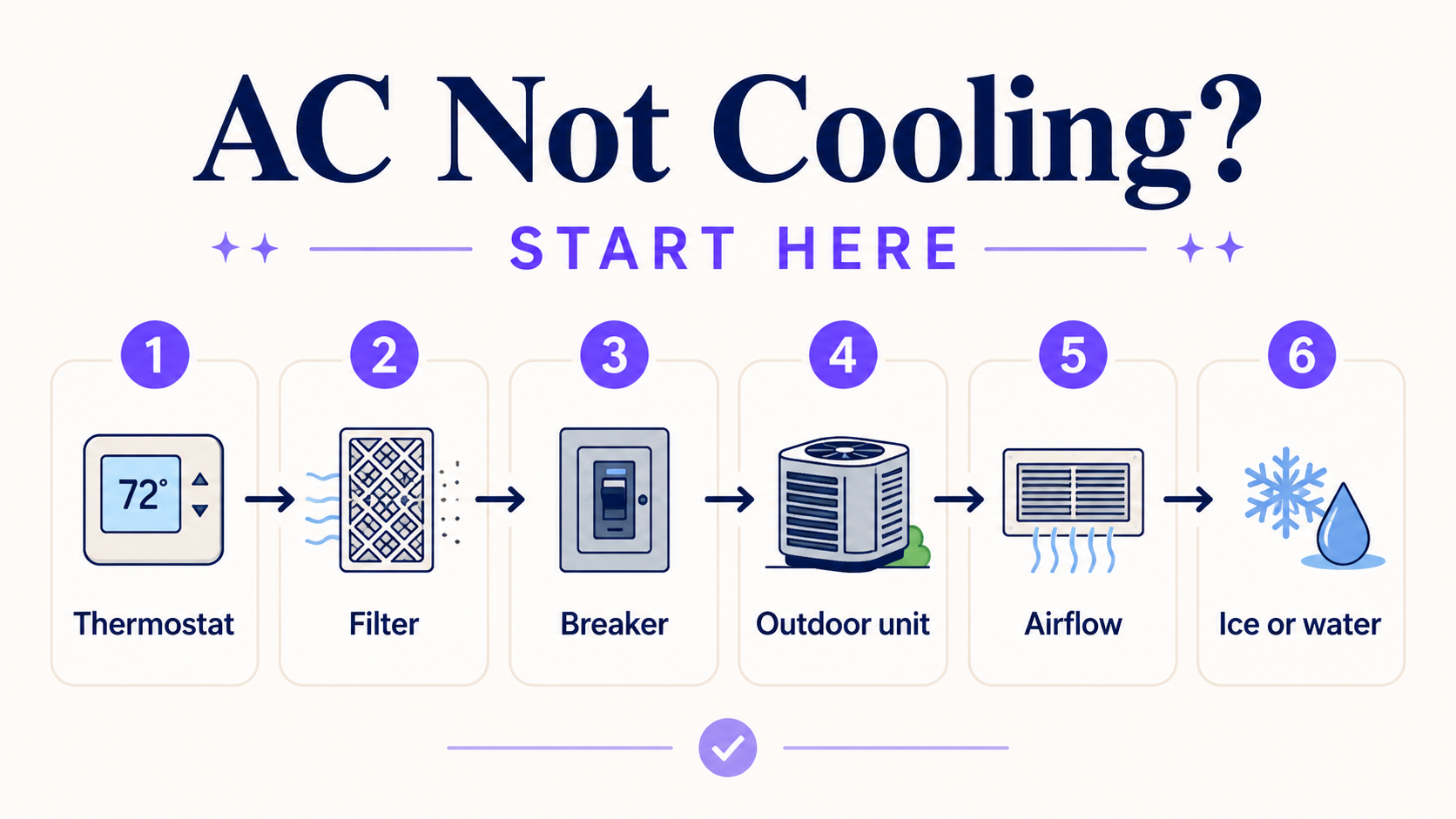
That distinction matters because a homeowner can spend money cleaning ducts and still have the same comfort issue if the real cause is a dirty filter, leaky attic ducts, poor return airflow, a dirty coil, high static pressure, or an oversized/undersized system.
What duct cleaning can actually do
Proper duct cleaning removes loose debris and contamination from accessible duct surfaces, registers, grilles, boots, and sometimes air handler compartments depending on the scope of work. A legitimate duct cleaning process usually involves source removal: loosening debris and using negative pressure equipment to capture it.
It can help when ducts contain:
- Construction debris
- Heavy dust buildup that is actually inside the ductwork
- Rodent or insect debris
- Visible growth that needs professional evaluation
- Debris after a duct repair or renovation
- Contamination from a water event
- Loose material blowing out of vents
In those situations, cleaning may be part of a larger fix.
What duct cleaning will not magically fix
Duct cleaning is not a substitute for HVAC repair, air sealing, filtration, humidity control, or good duct design.
It usually will not solve:
- A system that is low on refrigerant
- A weak blower motor
- A dirty evaporator coil
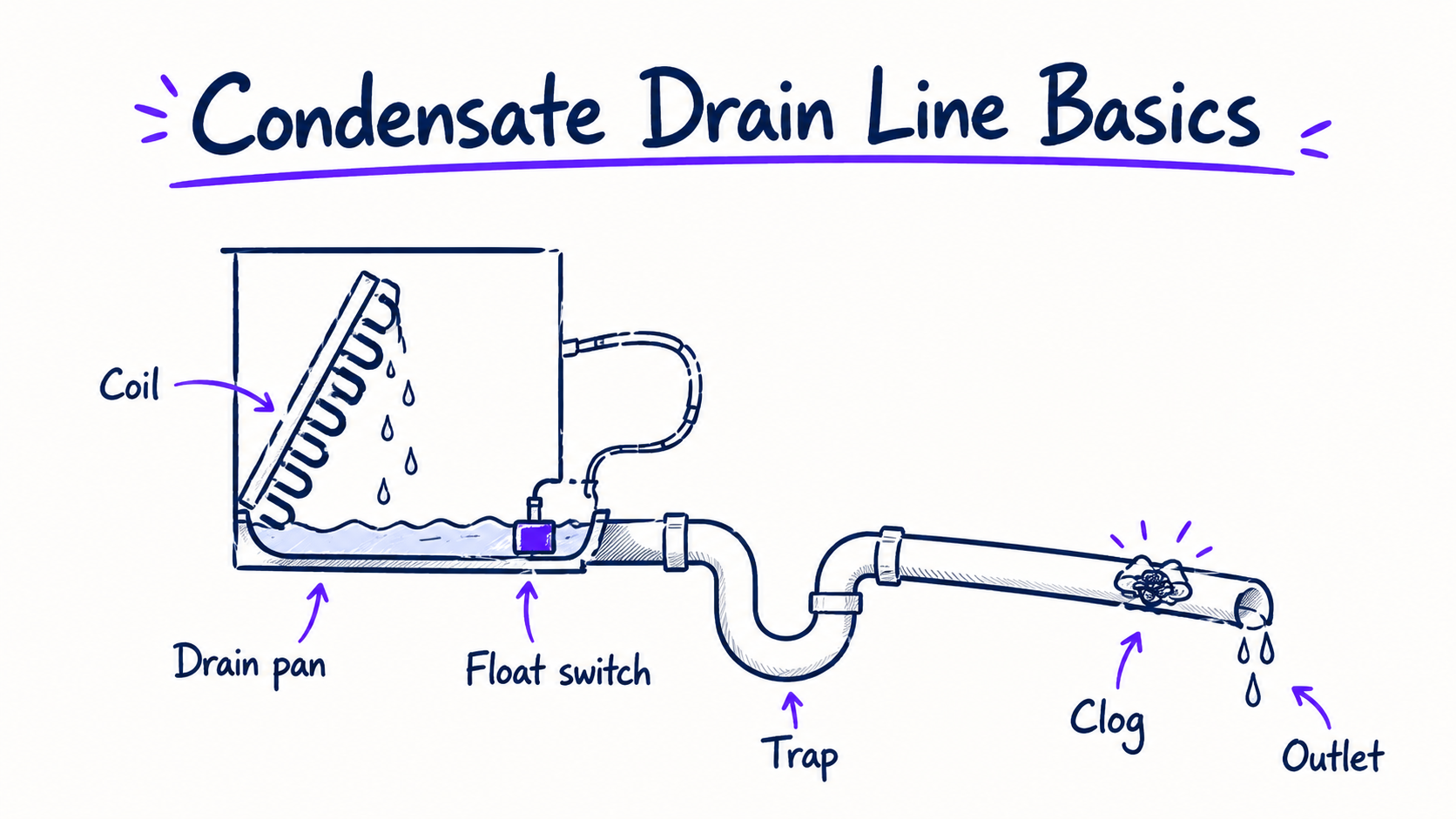
- A clogged condensate drain
- Leaky ducts in a hot attic
- Poorly sized return ducts
- High static pressure
- Rooms that are hot because of insulation or sun exposure
- Dust entering through attic gaps, doors, windows, or poor filtration
- Odors coming from moisture, drain pans, pets, smoke, or building materials
If someone promises duct cleaning will fix every comfort, health, odor, dust, and energy problem, be skeptical.
Signs duct cleaning may be worth considering
You can see debris blowing from vents
If material is visibly coming out of supply registers when the system starts, that is different from normal dust settling on furniture. It may indicate loose debris in the duct, deteriorating duct liner, poor filtration, or a duct problem.
There was recent construction or remodeling
Drywall dust and construction debris can get pulled into returns or ducts if the system was used during the project. Cleaning may be reasonable after the dust source is controlled.
There are signs of pests
Rodent droppings, nesting material, dead insects, or odors from pest activity are reasons to inspect the duct system. Cleaning alone may not be enough. The entry point also needs to be sealed or the issue can return.
There was water damage
Wet duct material, wet insulation, or moisture inside ductwork needs attention. Depending on duct type and contamination, replacement may be better than cleaning.
A professional inspection finds a real source
A camera inspection or direct visual inspection can show whether cleaning is justified. Without inspection, duct cleaning is often just a guess.
Signs duct cleaning is probably not the first move
Your main complaint is weak airflow
Weak airflow is often a filter, blower, coil, duct restriction, return sizing, closed damper, or static pressure issue. Cleaning the duct interior may not improve airflow unless there is an actual blockage or severe debris.
Your house is dusty again two days later
Dust often enters from air leaks, doors, windows, attic bypasses, leaky returns, poor filtration, or normal household activity. Cleaning ducts does not stop dust sources.
Only one room is uncomfortable
One hot room usually points to duct sizing, duct leakage, balancing, insulation, sun exposure, or return-air issues. Duct cleaning is rarely the first fix.
The pitch is based only on scare tactics
Be cautious with claims like “black mold everywhere” without testing, inspection, photos, or a clear explanation. Not every dark mark inside a vent is mold.
The filter question matters
If a system has been running with missing filters, wrong-size filters, collapsed filters, or big gaps around the filter rack, dust can get into the system. In that case, duct cleaning may be helpful, but the filter problem must be fixed first.
Otherwise the ductwork can get dirty again.
Look for:
- A filter that does not fit tightly
- A filter slot with no cover
- Dust streaks around return grilles
- Gaps where attic air can be pulled into returns
- A filter that bows or collapses when the blower runs
- A high-restriction filter causing airflow problems
Good filtration is not just about buying the thickest or highest-rated filter. The system has to be able to move air through it.
Ask these questions before paying for duct cleaning
Before approving the work, ask:
- What specific problem are we trying to solve?
- Did you inspect the ductwork first?
- Can you show photos or video of the contamination?
- Are you cleaning the supply side, return side, registers, grilles, and accessible trunk lines?
- How will debris be captured instead of blown into the house?
- Are chemicals or sealants being used? Why?
- Will the air handler or coil area be inspected separately?
- If pests or water are involved, what prevents the problem from returning?
- Are the ducts damaged, disconnected, or poorly sealed?
A good answer should be specific. “Because ducts are always dirty” is not specific.
Cleaning versus replacement
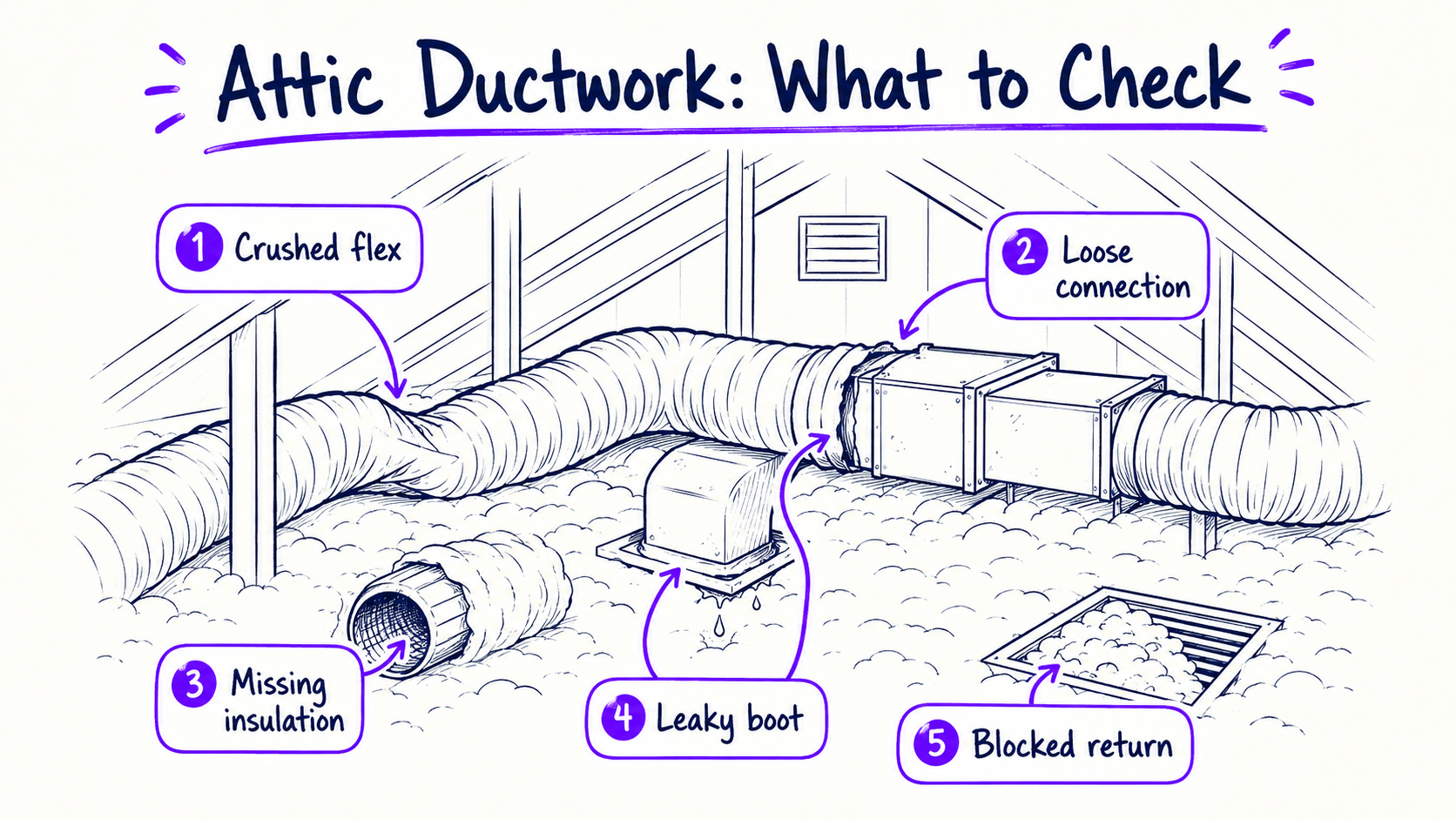
Some duct problems should not be solved by cleaning. Flexible duct that is crushed, torn, disconnected, mold-contaminated, water-damaged, or deteriorating may need repair or replacement. If the duct material itself is damaged, cleaning the inside does not fix the structure.
This is especially important in attic duct systems. In hot Texas attics, damaged duct insulation, loose connections, and air leaks can cause comfort and energy problems that cleaning cannot solve.
A practical decision guide
Use this as a simple decision path:
| Situation | Is duct cleaning likely worth it? | Better first step |
|---|---|---|
| Visible debris blowing from vents | Maybe | Inspect ducts and air handler. |
| Recent remodel dust | Maybe | Verify system was exposed and clean source areas. |
| Pest debris or odor | Maybe, after pest issue is solved | Seal entry points and inspect damage. |
| Water in ducts | Maybe, but replacement may be needed | Inspect for moisture damage. |
| Weak airflow | Not usually first | Check filter, coil, blower, static pressure, ducts. |
| One hot room | Not usually first | Inspect duct run, balancing, insulation, return path. |
| General allergies | Maybe only if contamination is present | Improve filtration and control dust/humidity sources. |
| High electric bill | Not usually first | Check equipment performance, ducts, insulation, thermostat use. |
FAQ
Is air duct cleaning worth the money?
It can be worth it when there is visible contamination, pests, construction debris, water damage, or debris blowing from vents. It is usually not worth it as a generic cure for every dust, allergy, airflow, or energy issue.
How often should air ducts be cleaned?
There is no one-size-fits-all schedule for every home. Cleaning should usually be based on inspection and actual conditions, not an automatic yearly upsell.
Will duct cleaning lower my electric bill?
Not usually by itself. If the real issue is leaky ducts, poor insulation, dirty coils, low refrigerant, or airflow restriction, those issues need to be corrected directly.
Can dirty ducts cause allergies?
Dirty ducts may contribute to indoor air quality concerns in some situations, but allergies can also be affected by filtration, humidity, pets, outdoor air leaks, dust sources, and cleaning habits.
Should I clean ducts or replace them?
If ducts are damaged, wet, disconnected, badly contaminated, or deteriorating, repair or replacement may be smarter than cleaning. Inspection should come first.
Related guides
- What Actually Happens During Duct Cleaning?
- Attic Ductwork: What to Check Before You Blame the Equipment
- Static Pressure Basics: Why Airflow Problems Fool People
- Inside Your Air Handler: The Parts Homeowners Should Recognize
Sources worth reading
- EPA: Should You Have the Air Ducts in Your Home Cleaned? https://www.epa.gov/indoor-air-quality-iaq/should-you-have-air-ducts-your-home-cleaned
- NADCA residential consumer information: https://nadca.com/homeowners
- EPA air cleaners and air filters in the home: https://www.epa.gov/indoor-air-quality-iaq/air-cleaners-and-air-filters-home
WHEN TO REQUEST SERVICE
Need help with this issue in Ferris or nearby Ellis County?
Submit a request and we will review it for local follow-up. Include what the system is doing, when it started, and anything you have already checked.