Most homeowners know the outdoor AC unit because they can see it in the yard. The indoor air handler is less understood, even though many cooling and heating symptoms start there.
You do not need to open the cabinet or service the air handler yourself. In fact, you should not open energized equipment or bypass safety switches. But knowing the main parts helps you describe problems more clearly and understand why “the AC is not cooling” may actually involve airflow, drainage, controls, or indoor components.
What an air handler does
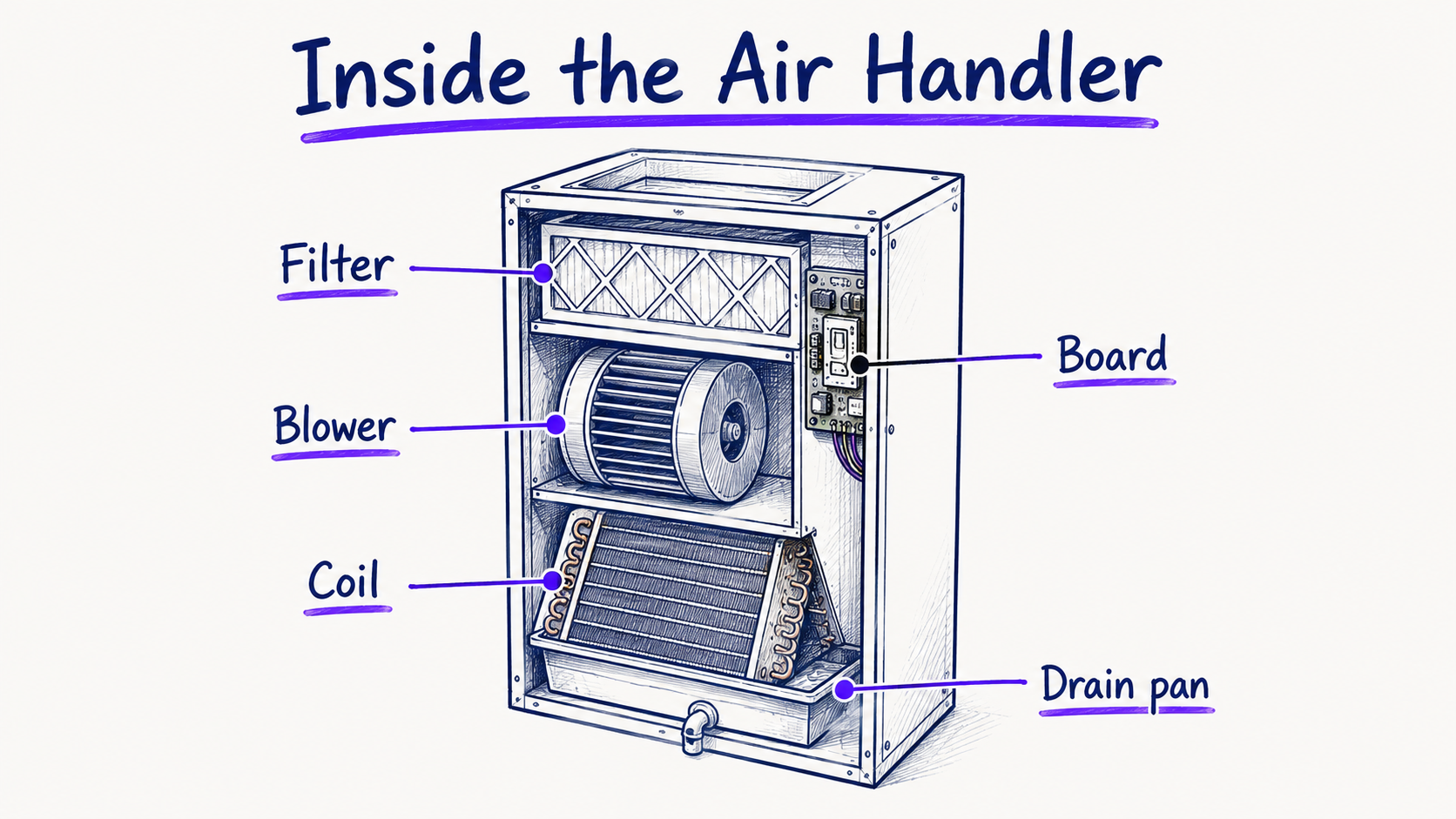
The air handler is the indoor unit that moves air through the HVAC system. In many homes, it contains or connects to the blower, evaporator coil, filter area, drain system, control wiring, and sometimes electric heat strips.
In cooling mode, warm indoor air returns to the air handler, passes through the filter, moves across the cold evaporator coil, and is blown back through the supply ducts. Moisture removed from the air drains away through the condensate system.
If any part of that process fails, comfort can suffer.
The filter area
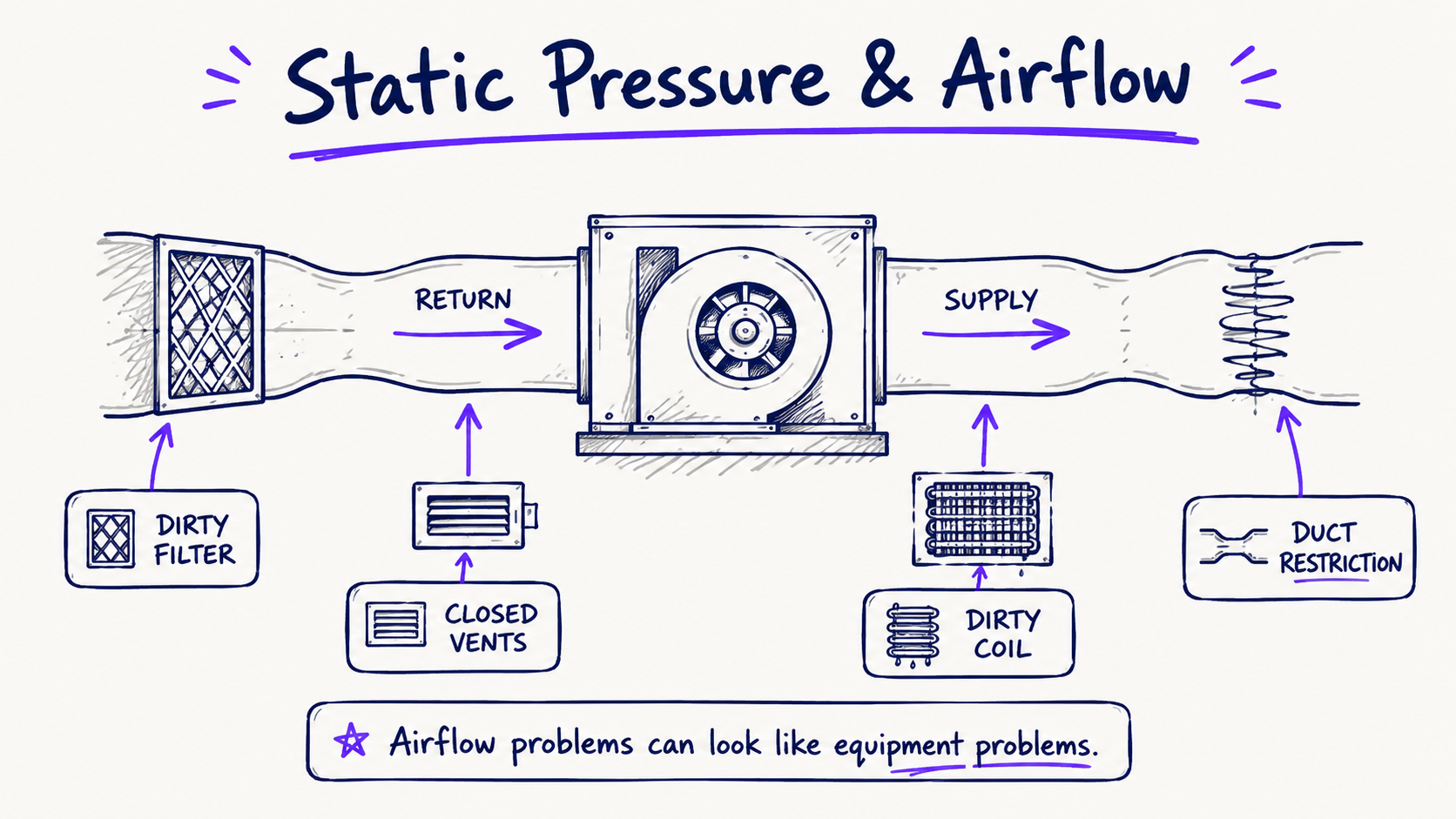
The filter is the homeowner’s most familiar part, but it is also one of the most important. A filter protects the blower and coil from dust buildup. It also affects airflow.
Filter-related problems can cause:
- Weak airflow
- Long run times
- Frozen coils
- Dust buildup inside the system
- Whistling filter slots
- Dirty evaporator coils
- Hot and cold rooms
Make sure the filter is the correct size, installed in the correct direction, and changed often enough for the home. Pets, dust, remodeling, and heavy system use can shorten filter life.
A filter that is too restrictive can create airflow problems even if it is new. If the filter bows inward or the return becomes loud, the system may be struggling to pull air through it.
The blower motor and blower wheel
The blower is the fan assembly that moves air through the home. The motor turns the blower wheel, and the wheel moves air through the duct system.
Blower-related symptoms can include:
- Little or no air from vents
- Airflow that starts and stops
- Loud vibration or rattling
- Burning smell
- System freezing due to poor airflow
- AC or heat running but no air movement
A dirty blower wheel can move less air even if the motor runs. A failing motor or control module can create intermittent airflow. These are technician-level issues.
The evaporator coil
The evaporator coil is the indoor coil that gets cold during cooling mode. Air passes across it, heat is absorbed, and moisture condenses on the coil.
Coil-related problems can include:
- AC not cooling well
- Ice on refrigerant lines or coil area
- Water overflow after ice melts
- Poor humidity control
- Weak airflow if the coil is dirty
- Musty smells if the coil and pan stay dirty or wet
A coil can become dirty from poor filtration, return leaks, missing filters, or long-term dust buildup. A frozen coil should not be ignored. Do not chip ice away. Turn cooling off and request service if it returns.
The drain pan and condensate line
As the evaporator coil removes moisture, water drips into the drain pan and leaves through the condensate drain line. This is normal. Water around the indoor unit is not.
Drain-related symptoms can include:
- Water in the emergency pan
- Ceiling stains under attic equipment
- AC suddenly shutting off
- Blank thermostat if a float switch trips
- Musty odor
- Water near a closet unit
A clogged drain is one of the more common AC service issues in humid weather. The drain system should be kept clear, and any float switch should be treated as a safety device.
The float switch
A float switch shuts the system down if water backs up high enough to risk overflow. It may be installed on the drain line, in a secondary pan, or near the indoor unit.
If the switch trips, the AC may stop cooling or the thermostat may go blank. Do not bypass it. The switch is warning you that water is where it should not be.
Bypassing a float switch can turn a simple drain service into ceiling, insulation, or flooring damage.
Electric heat strips
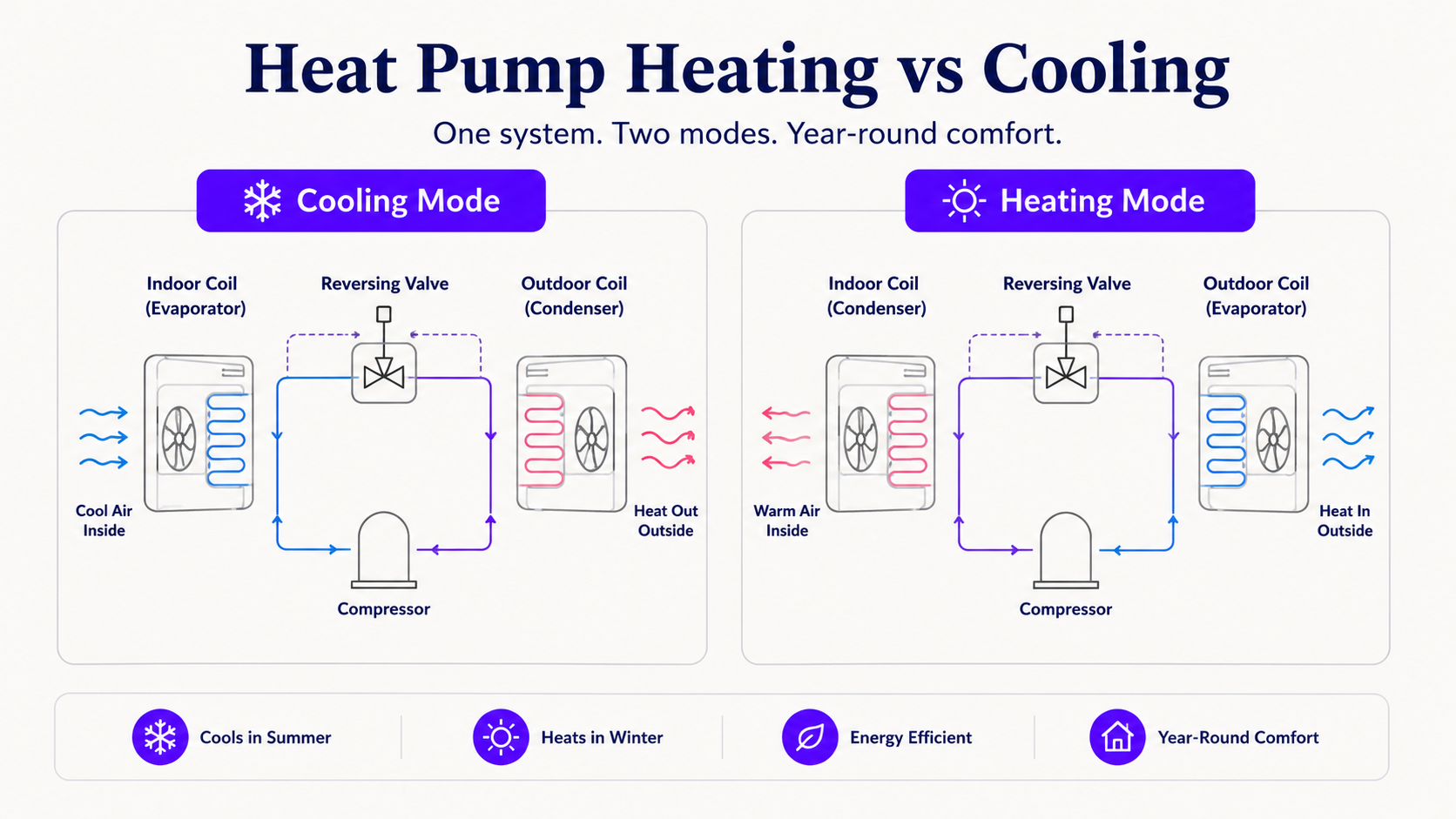
Some air handlers include electric heat strips for heating, auxiliary heat, or emergency heat. These are common with heat pump systems.
Heat-strip issues can involve:
- Burning smell when first used after sitting dusty
- Breaker trips
- Heat not keeping up
- Emergency Heat confusion
- High electric bills if backup heat runs too often
A slight dusty smell the first time heat runs can happen, but persistent burning smells, smoke, buzzing, or breaker trips need service.
The control board and low-voltage wiring
The control board and wiring coordinate thermostat signals, blower operation, safety switches, heat strips, and outdoor unit calls. These parts are not homeowner-serviceable, but they explain why symptoms can overlap.
For example:
- A blank thermostat may be a power issue, float switch, transformer issue, wiring issue, or thermostat issue.
- The indoor blower may run while the outdoor unit does not.
- A heat pump may behave incorrectly after a thermostat replacement.
- A safety switch may prevent operation.
Do not jump wires or bypass controls to “test” operation. That can damage equipment or create unsafe conditions.
The cabinet, panels, and safety switches
Air handler panels are not just covers. Some systems have door switches or panel fit requirements. Loose panels can create air leaks, noise, or safety issues.
If the system stopped after a filter change, make sure the panel is fully seated. If it still does not run, do not force or tape switches. Ask for service.
What homeowners can safely do
Safe homeowner tasks usually include:
- Changing the filter
- Keeping returns and supply vents open and unblocked
- Looking for water near the unit
- Noting ice, noises, smells, or blank thermostat symptoms
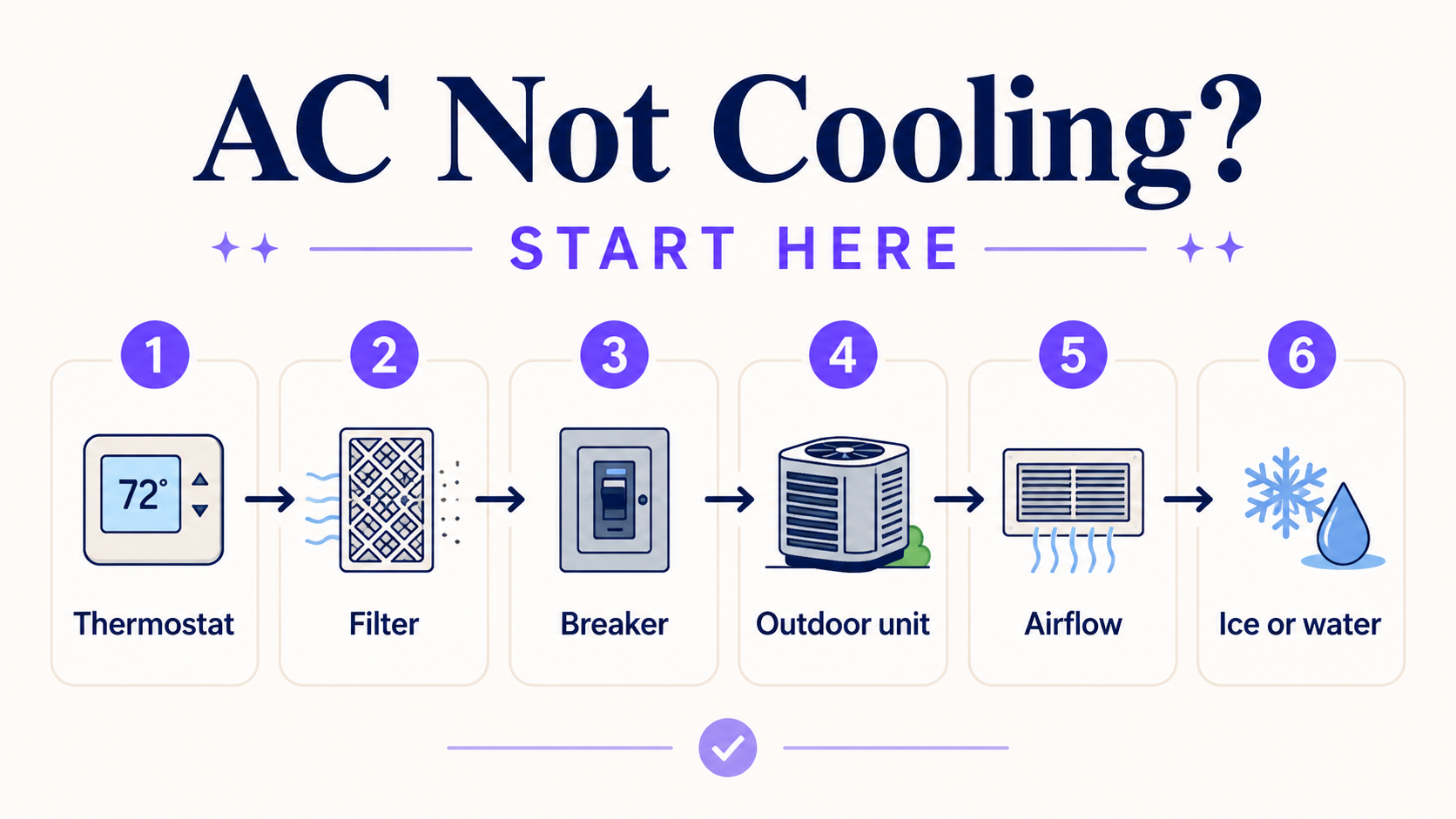
- Checking thermostat mode and settings
- Keeping the area around the indoor unit accessible
- Requesting service before a small issue becomes damage
Do not open energized compartments, clean coils with harsh chemicals, handle refrigerant lines, bypass float switches, or reset breakers repeatedly.
Why knowing these parts helps
When you request HVAC service, the problem description matters. “AC not working” is less useful than:
- “The thermostat is blank and there is water in the pan.”
- “The outdoor unit runs, but the indoor blower does not.”
- “There is ice on the larger copper line.”
- “Airflow is weak even with a new filter.”
- “The heat pump only heats in Emergency Heat.”
Those details help narrow the starting point and can save time.
FAQ
What is the difference between an air handler and an outdoor AC unit?
The outdoor unit rejects or absorbs heat outside. The air handler is the indoor unit that moves air through the home and usually contains the blower, coil, filter area, and drain components.
Can I open my air handler to clean it?
Homeowners can usually change filters and keep the area accessible, but opening energized compartments, cleaning coils, or working around controls should be left to qualified service.
Why is there water near my air handler?
Water may come from a clogged condensate drain, overflowing pan, frozen coil thawing, cracked pan, or disconnected drain line. It should be addressed quickly.
Why is my air handler frozen?
Freezing can be caused by poor airflow, dirty filters, dirty coils, blower problems, refrigerant issues, or metering problems. Turn cooling off and request service if ice returns.
Why does the indoor fan run but the outdoor unit does not?
Possible causes include thermostat/control issues, outdoor electrical problems, capacitor/contactor issues, safety switches, or equipment failure. Do not keep resetting breakers.
Related guides
- Condensate Drain Line Clogged? What the Symptoms Usually Mean
- Static Pressure Basics: Why Airflow Problems Fool People
- Heat Pump Stuck Heating or Cooling? Start With the Basics
- A Simple Seasonal HVAC Maintenance Calendar for Texas
Sources worth reading
- U.S. Department of Energy air conditioner maintenance: https://www.energy.gov/energysaver/maintaining-your-air-conditioner
- ENERGY STAR HVAC maintenance checklist: https://www.energystar.gov/campaign/heating_cooling/maintenance_checklist
- U.S. Department of Energy heat pump systems: https://www.energy.gov/energysaver/heat-pump-systems
WHEN TO REQUEST SERVICE
Need help with this issue in Ferris or nearby Ellis County?
Submit a request and we will review it for local follow-up. Include what the system is doing, when it started, and anything you have already checked.